
A chicken in every pot! A car in every garage! Interchange optimization for every credit card transaction...
Read MoreIn This Post:
The recent swipe fee settlement between merchants and the major card networks has generated a great deal of attention, particularly because it includes reductions to certain interchange categories and caps on some standard consumer card rates. At first glance, the changes appear to represent a meaningful win for merchants who have long argued that credit card processing costs are too high. However, the details of the settlement reveal that the benefits may be more limited than the headlines suggest. One of the most important aspects of the discussion is what was not included in the agreement. While some consumer credit card interchange categories will see modest reductions, corporate and purchasing cards were not part of those changes. This matters because these cards are among the most expensive for merchants to accept and are used widely by businesses, corporate procurement teams, and government agencies to manage purchasing programs.
The Value of Level II and Level III Data
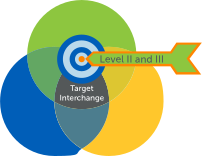
Historically, transactions made with corporate and purchasing cards could qualify for reduced interchange rates if the merchant provided additional transaction information back to the issuing bank. This information, commonly referred to as Level II or Level III data, typically includes details such as sales tax amounts, invoice or purchase order numbers, and other reference information that helps the issuing bank provide reconciliation and business spending information back to their commercial card holders. When this additional data is submitted properly, merchants qualify for lower interchange categories.
Over the years, however, many processors and payment gateways began using automated tools that attempted to “optimize” interchange by populating these data fields with generic information. While this approach sometimes reduced costs for merchants in the short term, the data transmitted was not always tied to the actual transaction. In response to these practices, Visa introduced new initiatives designed to improve the accuracy and integrity of commercial transaction data.
Data Accuracy: The New Battleground for Lower Interchange
Through programs that use advanced analytics and automated validation tools, the card networks are now placing greater emphasis on verifying that the information provided in Level II and Level III fields is legitimate and directly related to the transaction being processed. Transactions that do not meet these standards are more likely to fall into higher-priced interchange categories. As a result, merchants that rely on systems unable to capture and transmit accurate transaction data may see costs increase rather than decrease.
Beyond the Headlines: Why Data Is the Real Game Changer
The broader takeaway is that while the swipe fee settlement may provide modest relief in some consumer card categories, it does not address many of the costs associated with commercial cards. In fact, the payments ecosystem is moving toward a model where accurate transaction data is increasingly important for qualifying for the best interchange rates. Merchants that want to control payment acceptance costs will need to ensure their processors and payment systems are capable of capturing and transmitting legitimate transaction data rather than relying on shortcuts that attempt to artificially qualify transactions for lower pricing.In other words, be careful what you wish for. The headline reductions may sound significant, but the real impact often lies in the fine print.
The Path Forward for Merchants
The world of credit card interchange is evolving quietly, but the implications for merchants are significant. While headline-grabbing settlements may offer some short-term relief, true long-term savings and competitive advantage will go to those who prioritize data integrity and accuracy. Qualpay's consultative approach, backed by flexible in-house technology, enables us to solve complex payment challenges and proactively manage changes such as this to limit increases.
For more information please contact support@qualpay.com